For families living with asthma or chronic respiratory conditions, the home environment is a sanctuary that must be meticulously managed. While a wood-burning fireplace offers unmatched warmth and aesthetic appeal, it can also be a significant source of indoor air pollutants if not maintained with clinical precision. In Texas, where seasonal allergies already challenge the respiratory system, maintaining a clean chimney is not just a matter of fire safety. It is a fundamental component of indoor air quality management.
At Texas Chimney LLC, we recognize that for sensitive individuals, the “standard” sweep isn’t enough. Managing a fireplace in an asthma-friendly home requires a deep understanding of particulate matter, proper ventilation physics, and the elimination of microscopic triggers that can linger long after the fire has gone out.
The Connection Between Chimney Hygiene and Asthma Triggers
Asthma is characterized by hyper-responsive airways that react to environmental irritants. When a chimney is neglected, it accumulates soot, creosote, and ash. These substances are composed of fine particulate matter, often referred to as PM2.5 (particles smaller than 2.5 micrometers). Because these particles are so small, they can bypass the body’s natural filters in the nose and throat, traveling deep into the lungs and entering the bloodstream.
According to the Environmental Protection Agency (EPA), smoke from wood-burning fireplaces contains a complex mixture of gases and fine particles that can trigger asthma attacks, reduce lung function, and increase respiratory symptoms. For a household with asthmatic residents, a dirty chimney acts as a reservoir for these irritants. Even when a fire isn’t burning, a poorly sealed damper or a downdraft can pull these microscopic particles into the living space, creating a persistent “invisible” trigger.
How Professional Cleaning Reduces Fine Particulate Matter
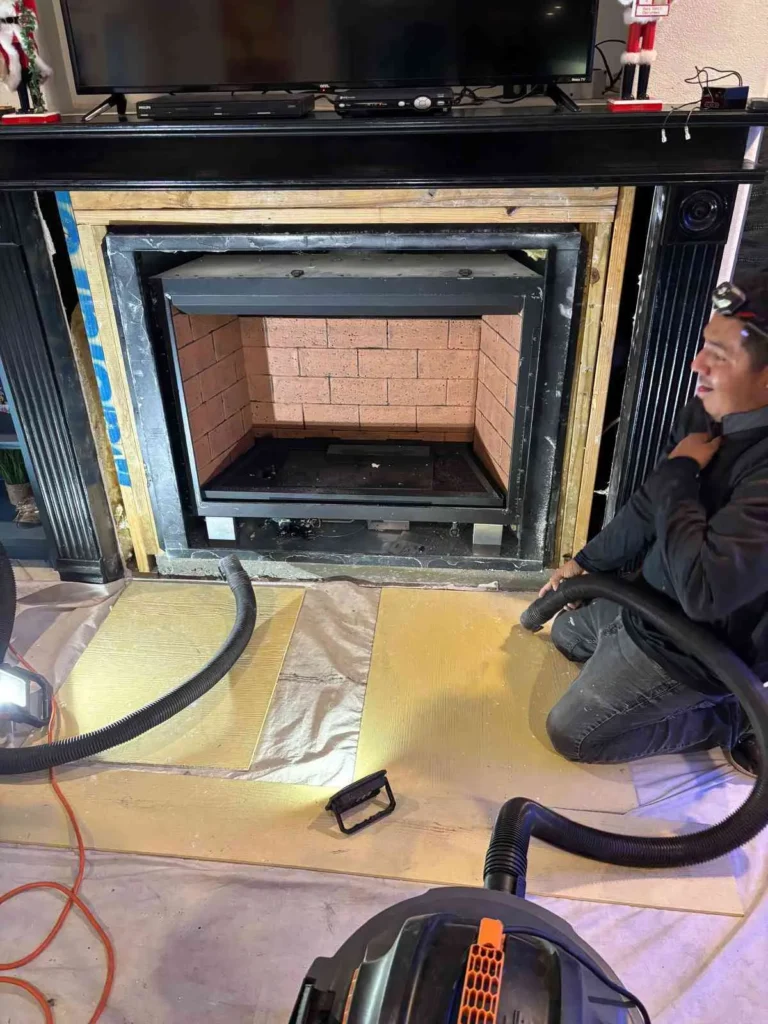
A professional chimney cleaning does more than just prevent flue fires; it physically removes the source of airborne irritants. Our process at Texas Chimney LLC focuses on the total extraction of combustible byproducts and fine dust. By utilizing high-powered, HEPA-filtered vacuum systems, we ensure that the soot removed from the flue walls does not escape into your home’s air during the cleaning process itself.
Professional maintenance addresses three specific areas critical for asthma sufferers:
- Creosote Removal: We eliminate the flaky and glazed deposits that produce acrid odors and fine dust.
- Obstruction Clearing: We remove bird nests, cobwebs, and debris that restrict airflow. Restricted airflow causes “back-puffing,” forcing smoke and carbon monoxide back into the room.
- Flue Sanitization: We ensure the smoke shelf, a flat area behind the damper that often collects piles of fallen soot, is completely cleared to prevent stagnant odors from circulating.
For those looking for more data on how indoor air quality impacts childhood asthma specifically, the Centers for Disease Control and Prevention (CDC) provides extensive resources on controlling environmental triggers.
The Role of Proper Draft and Ventilation
In the world of chimney physics, “draft” is the force that pulls smoke out of your home. If a chimney is coated in soot or is structurally compromised, the draft is weakened. This leads to a higher concentration of carbon monoxide and nitrogen dioxide in the home. For an individual with asthma, even a slight increase in these gases can lead to chest tightness and shortness of breath.
Our technicians perform a comprehensive Level 1 or Level 2 inspection during every cleaning. We verify that the chimney’s internal diameter is sufficient and unobstructed, ensuring that 100% of combustion byproducts are exhausted outdoors. We also inspect the chimney cap and spark arrestor. A damaged cap can allow moisture to enter the flue, leading to mold growth—another potent and dangerous asthma trigger. Research from Harvard T.H. Chan School of Public Health highlights that dampness and mold in the home environment are significant contributors to the exacerbation of respiratory illnesses.
Best Practices for “Burn Wise” Fireplace Use
Even with a perfectly clean chimney, the way you use your fireplace matters. To maintain a healthy environment for asthmatic family members, you must follow strict burning protocols. This Technical Proficiency in fire management ensures that the least amount of smoke possible is produced.
- Burn Seasoned Wood Only: Use wood that has been dried for at least six months. “Green” or wet wood smolders and produces significantly more smoke and PM2.5.
- The Top-Down Method: Build your fire by placing larger logs on the bottom and smaller kindling on top. This method creates a faster-burning, cleaner fire with minimal initial smoke.
- Avoid Chemical Starters: Never use gasoline, kerosene, or even colored newsprint. The inks and chemicals in these materials release toxic fumes that are highly irritating to sensitive lungs.
- Monitor Humidity: Keep indoor humidity between 30% and 50%. High humidity can trap particles in the air, while very dry air can irritate the throat and lungs.
For more technical guidance on the science of wood combustion and environmental health, the American Lung Association offers detailed checklists for maintaining healthy air at home.
Structural Integrity: Beyond the Soot
It is a common misconception that chimney cleaning is only about the brush. In an asthma-friendly home, the integrity of the flue liner is paramount. If the liner is cracked (a condition often found in older Texas homes with clay tile liners), smoke and gases can seep into the wall cavities and eventually into the bedrooms or living areas of the house.
Our team uses video camera technology to inspect the interior of your flue. This allows us to see what the naked eye cannot, tiny fractures or gaps in the mortar joints that could compromise your home’s air seal. Ensuring a gastight flue is the only way to guarantee that the fireplace remains a closed system, safely separated from the air your family breathes.
The Importance of Routine and Reliability
Consistency is the hallmark of effective asthma management. Just as you wouldn’t skip a furnace filter change or a medical check-up, an annual chimney cleaning should be a non-negotiable part of your home maintenance calendar. In the humid Texas climate, chimney systems can degrade faster due to moisture-driven corrosion and biological growth. By scheduling a professional sweep once a year, preferably before the burning season begins, you ensure that your fireplace is optimized for the highest possible air quality standards.
Breathe Easier with Texas Chimney LLC
Your family’s health is too important to leave to chance or unverified “DIY” cleaning methods. At Texas Chimney LLC, we bring decades of localized industry knowledge and a commitment to meticulous service that protects your respiratory health as much as your property. We understand the unique challenges faced by Texas homeowners with asthma, and we utilize the most advanced dust-containment technology and diagnostic tools to ensure your home stays clean, safe, and irritant-free. Don’t wait for a respiratory flare-up to realize your fireplace needs attention, contact us today or call at (713) 322-5196 to schedule a specialized, asthma-conscious chimney cleaning and inspection to ensure your indoor air remains pristine all season long.