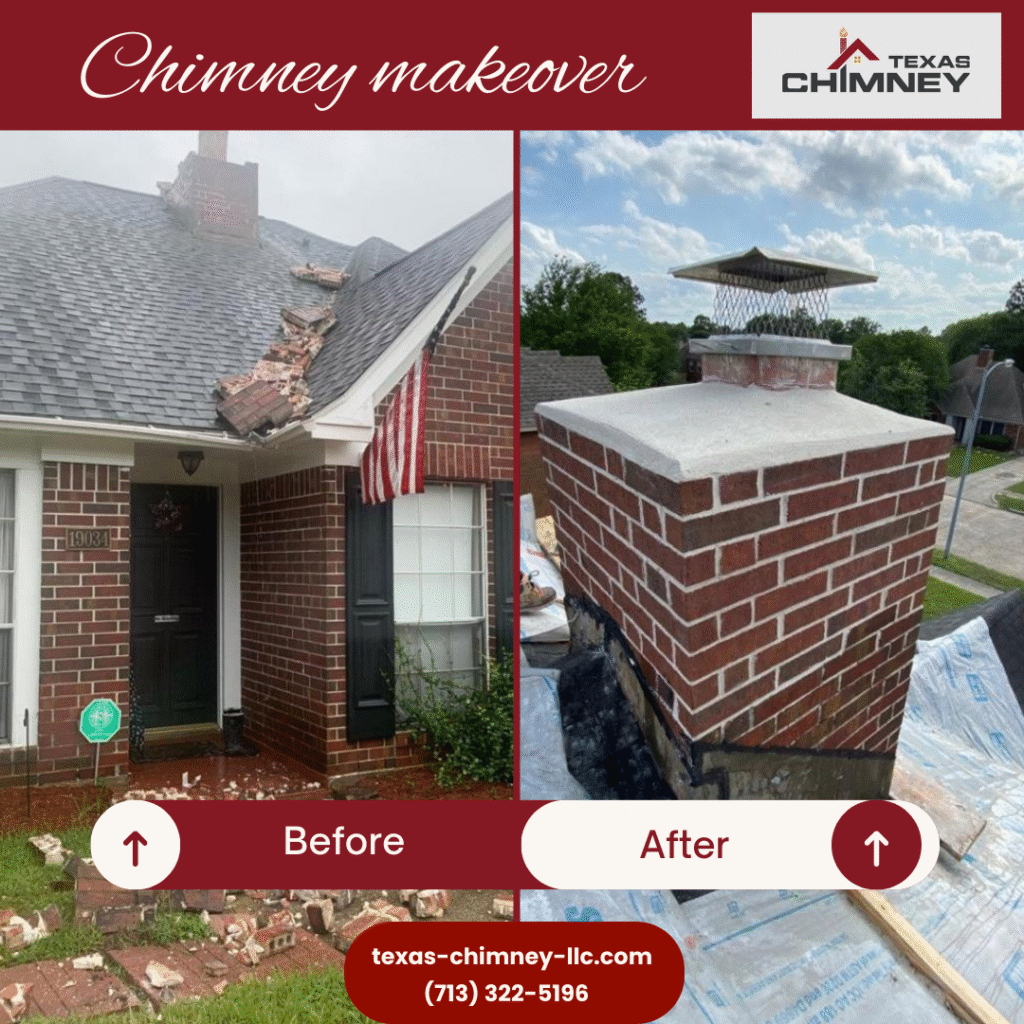
When you notice a problem with your chimney whether it’s a crumbling mortar, a leaky flue, or a visible lean, a critical question immediately arises: Do I need a simple repair, or is it time for a full replacement (rebuild)?
The decision between chimney repair and replacement is one of the most significant and costly maintenance choices a Houston homeowner can face. Choosing wrong can mean spending thousands on a temporary fix, or, conversely, replacing a structure that only needed a bit of expert attention.
At Texas Chimney LLC, we prioritize an honest, professional assessment. Our goal is to provide the most cost-effective, long-term solution that guarantees your family’s safety. This guide breaks down the core factors, red flags, and professional advice you need to confidently decide between a targeted Chimney Repair or a complete chimney rebuild.
Pillar 1: The Extent of the Damage
The first and most critical factor is the scope and severity of the damage. Chimney professionals use a rule of thumb: if the damage affects less than 30% of the structure, repair is usually the answer. If it exceeds that threshold, replacement often becomes the more practical and safer option.
When to Choose Chimney Repair (Targeted Fixes):
Repair is the logical choice when the problem is confined to a single component or is superficial in nature.
Damaged Mortar Joints (Tuckpointing): If the mortar between the bricks is cracked, recessed, or crumbling, but the bricks themselves are generally in good shape, a process called tuckpointing is the remedy. This involves removing the old, damaged mortar and replacing it with fresh, new mortar to restore the chimney’s structural integrity and waterproof barrier.
Cracked Chimney Crown: The crown is the concrete slab at the very top. Small cracks can often be sealed with a flexible, waterproof crown coating to prevent water from seeping into the masonry below.
Simple Water Leaks: Leaks caused by minor flashing separation (where the chimney meets the roof) or a missing/damaged chimney cap are usually fixed with targeted repairs, such as re-sealing the flashing or installing a new, high-quality chimney cap.
Minor Flue Liner Cracks (Relining): If your clay tile flue liner has small, isolated cracks, it may be possible to install a new metal liner. This is called relining, and it’s a structural replacement of the interior exhaust passage, not a full chimney rebuild. This is often necessary when installing a new appliance.
When to Choose Chimney Replacement (Rebuild):
Replacement is necessary when the core structure is compromised, or the damage is so extensive that multiple, recurring repairs are needed.
Structural Instability (Leaning): This is the ultimate red flag. If your chimney is visibly leaning or separating from your Houston home, the foundation, footing, or sub-structure has failed. This poses a severe safety risk and requires an immediate, complete rebuild from the ground up to restore stability.
Widespread Spalling or Crumbling Bricks: Spalling is when the face of the brick flakes off due to repeated water saturation and thermal cycling (especially in Houston’s moist climate). If this damage is extensive, affecting a large percentage of the brickwork, the masonry’s strength is compromised, and only a rebuild can guarantee safety.
Extensive Damage from a Chimney Fire: A high-heat chimney fire can crack or burst clay flue tiles, damage the smoke chamber, and compromise the chimney’s heat-shielding capability. Often, the damage is so profound that a full rebuild or a major partial rebuild is required to restore safety.
Internal Deterioration: If a thorough video inspection of your flue reveals massive deterioration of the flue liner, missing tiles, or widespread breaches, a full or partial rebuild may be necessary to install a safe venting system.
Pillar 2: Cost, Age, and Long-Term Value
The initial cost is a factor, but a cheaper repair now can lead to a more expensive replacement later. It’s essential to look at the long-term value.
The Financial Calculation
- Repair Cost vs. Replacement Cost: If the cost of the repair is approaching 40-50% of the estimated cost of a full replacement, the replacement option often provides better long-term value. Replacing a chimney gives you a brand new structure with a long lifespan and a fresh warranty.
- Age of the Chimney: Most masonry chimneys have a lifespan of 75-100 years, but components like the flue liner and mortar may degrade much faster. If your chimney is very old (50+ years) and exhibits multiple complex issues, investing significant repair money into a structure nearing the end of its life may be illogical. Replacement ensures your chimney meets modern safety codes and standards.
- Frequency of Repair: Are you calling Texas Chimney LLC every year for a new patch job? If you are constantly pouring money into fixing the same recurring water leak or masonry issue, it’s a strong indication of a deeper structural problem that only a rebuild can resolve.
Pillar 3: Safety and Code Compliance
Safety should always be the deciding factor. Your chimney must effectively contain heat and safely vent toxic gases like carbon monoxide.
The Safety Mandate
Unsafe Flue: If your chimney liner is compromised, cracked, broken, or improperly sized for your appliance, it is a direct fire hazard and a carbon monoxide risk. You must address this immediately. A new appliance installation (like a new wood stove) often requires a new, correctly sized liner, sometimes forcing a replacement.
Structural Risk: As mentioned, a leaning or visibly unstable chimney must be condemned and rebuilt. It poses a risk of collapse, which is catastrophic.
Bringing it Up to Code: Older chimneys in Houston may not meet current NFPA (National Fire Protection Association) standards or local building codes, especially concerning required clearances to combustible materials. If a major repair is needed, you may be required to bring the entire system up to current code, which often necessitates a full rebuild.
Your Next Step: The Professional Inspection
For the most accurate assessment of your specific situation, the absolute best course of action is to schedule a comprehensive inspection with certified professionals like Texas Chimney LLC.
Our technicians perform a thorough Level 2 Inspection, which includes a detailed video scan of the interior flue and a top-to-bottom structural examination. We will provide you with a detailed, written report outlining the damage, explaining the repair options, and presenting a transparent quote for both repair and replacement scenarios.
Whether you need detailed Masonry and Repair services for localized damage or a full assessment for a complete replacement, trust the Houston experts to guide you to the safest, most durable, and most cost-effective decision for your home.
Don’t guess on safety. Contact us today to schedule your professional chimney evaluation.