A crackling fireplace is the hallmark of a cozy home, but the beauty of a fire comes with the responsibility of maintenance. Behind the scenes, your chimney works as a vital ventilation system, exhausting dangerous gases and soot. Over time, these byproducts create creosote, a highly flammable substance that is the leading cause of chimney fires.
Maintaining a safe fireplace requires more than just a quick sweep of the hearth; it necessitates a specialized arsenal of chimney cleaning tools. Whether you are a curious homeowner or an aspiring professional, understanding the “tools of the trade” is the first step toward fire safety and structural longevity.
1. The Foundation: Chimney Brushes and Rods
The most recognizable elements of any chimney sweep’s kit are the brushes and rods. However, there is no “one-size-fits-all” solution. Using the wrong brush material can actually damage your flue liner, leading to costly repairs.
Choosing the Right Brush Material
- Wire Brushes: These feature stiff, steel bristles designed specifically for traditional masonry chimneys with clay tile flues. They are aggressive enough to scrape away stubborn, hardened soot.
- Polypropylene (Poly) Brushes: These are essential for metal chimneys and stainless steel liners. Metal bristles can scratch and compromise the integrity of steel liners; poly brushes provide a thorough clean without voiding the manufacturer’s warranty.
The Role of Extension Rods
Brushes are only effective if they can reach the entire length of the flue. Professional-grade rods are typically made of fiberglass or nylon. Fiberglass rods are rigid and best for straight flues where you need to apply significant pressure. In contrast, flexible nylon rods are designed to navigate the bends and offsets common in modern chimney architecture.
2. Advanced Technology: Rotary Power Sweeping Systems
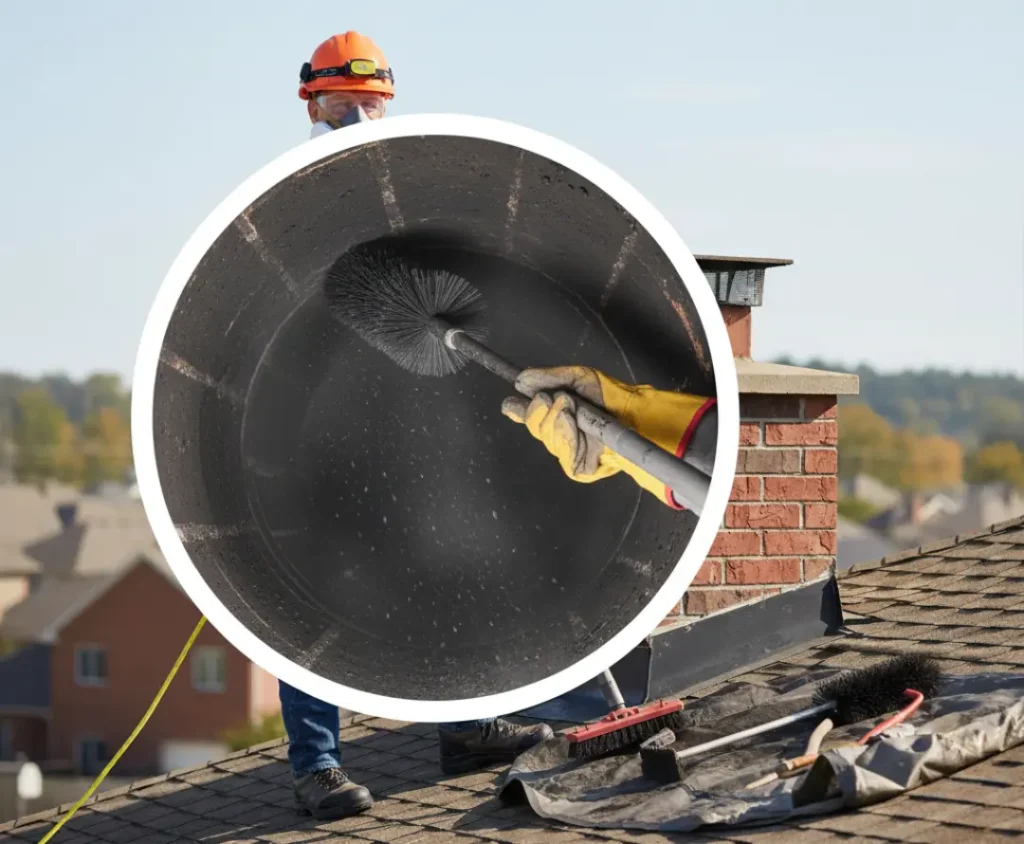
In the past, chimney sweeping was a purely manual labor task. Today, professionals often utilize rotary power sweeping systems. These systems connect specialized cleaning heads to a high-speed power drill.
As the drill spins, the cleaning head (often made of heavy-duty nylon whips) uses centrifugal force to “scrub” the flue walls. This method is significantly more effective at removing Stage 2 creosote, the crunchy, layered buildup that manual brushes often skip over. For homeowners, this means a deeper clean and a lower risk of ignition.
3. The “Silent” Essential: Industrial HEPA Vacuums

One of the biggest concerns for homeowners is the mess associated with chimney cleaning. A professional sweep solves this using an industrial-grade HEPA (High-Efficiency Particulate Air) vacuum.
Unlike a standard shop-vac, which might blow fine soot particles back into your living room, a HEPA vacuum captures 99.97% of dust and allergens. This is critical because soot contains fine particulates that can irritate the respiratory system. The vacuum is often running throughout the entire process to create “negative pressure,” ensuring that every speck of dust is pulled into the filtration system rather than onto your carpet.
4. Inspection Tools: Cameras and Mirrors
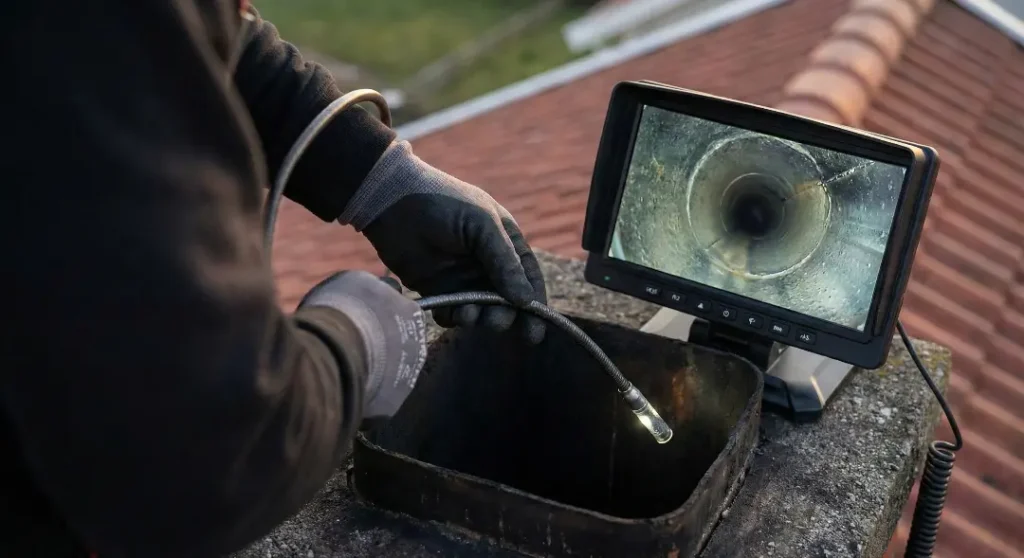
You cannot fix what you cannot see. Because the interior of a chimney is dark and narrow, specialized inspection tools are mandatory for a safe assessment.
- Video Inspection Cameras: Modern technicians use high-definition cameras mounted on flexible cables. These cameras provide a real-time feed of the flue interior, allowing the sweep to spot hairline cracks, missing mortar joints, or animal nests that would be invisible from the ground.
- Smoke Chamber Brushes: The smoke chamber (the area just above the firebox) has a unique, sloped shape. Standard brushes cannot reach its corners, so technicians use specialized “U-shaped” or long-bristle hand brushes to ensure this high-heat area is clear of flammable debris.
According to the Chimney Safety Institute of America (CSIA), a visual inspection is the only way to confirm that a chimney is structurally sound enough to handle the heat of a live fire.
5. Chemical Cleaning Agents
Sometimes, mechanical brushing isn’t enough. When creosote reaches “Stage 3” (a glazed, tar-like appearance), it becomes a solid fuel source that is nearly impossible to scrub away.
In these cases, professionals use chemical creosote removers. These are typically powders or liquid sprays that, when heated, react with the glazed creosote to change its molecular structure. This turns the dangerous glaze into a flaky, friable ash that can then be easily removed with standard brushes during a follow-up visit.
6. Safety and Protective Gear
Chimney cleaning involves working at heights and handling hazardous materials. For any DIY enthusiast, the following safety gear is non-negotiable:
- Full-Face Respirators: Protecting the lungs from soot and carbon dust is paramount.
- Roof Harnesses: Fall protection is a requirement for any rooftop work.
- Canvas Drop Cloths: These protect the interior of the home from accidental spills or tracking.
For more information on home fire prevention and safety standards, the National Fire Protection Association (NFPA) provides extensive resources on residential heating safety. Additionally, the U.S. Consumer Product Safety Commission (CPSC) offers guidelines on carbon monoxide prevention related to chimney blockages.
Why Professional Expertise Matters
While many of these tools are available for purchase, the expertise required to use them safely is irreplaceable. A professional sweep doesn’t just “clean”; they diagnose. They understand the difference between normal soot and a dangerous structural crack. They know how to identify “drafting” issues that could lead to carbon monoxide poisoning, a topic discussed extensively by health organizations like the Centers for Disease Control and Prevention (CDC).
Regular maintenance by a certified professional ensures that your fireplace remains a source of comfort rather than a liability.
Ensure Your Safety with Texas Chimney LLC
Having the right tools is only half the battle; knowing how to use them to protect your home is where Texas Chimney LLC excels. Our team utilizes the latest in rotary sweeping technology, high-definition internal cameras, and HEPA-certified filtration to provide a cleaning that is both thorough and mess-free. We don’t just sweep away soot; we provide a comprehensive safety assessment to give you peace of mind all winter long. Don’t wait for a dangerous buildup to become a hazard. Contact us today to schedule your professional cleaning and inspection, and let our experts ensure your fireplace is operating at its peak performance and safety.