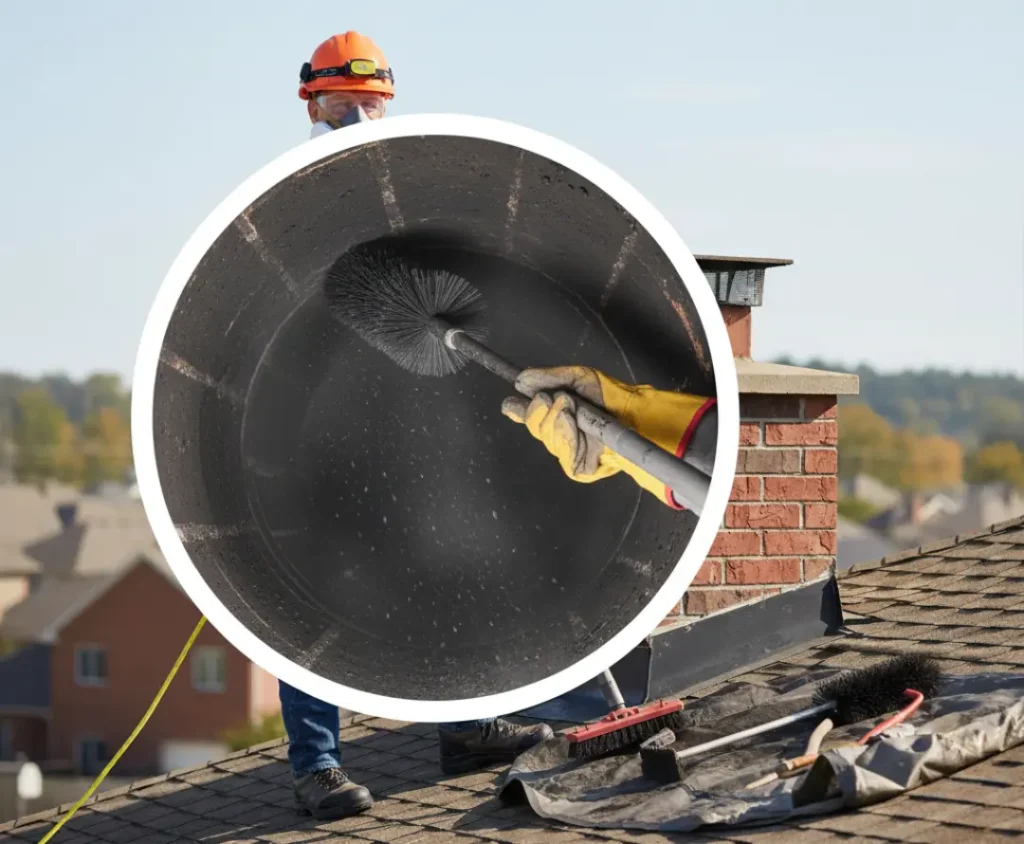
A fireplace should be a source of warmth and comfort. But when you light a fire and your living room fills with smoke, that comfort quickly turns to frustration and concern. A smoky fireplace is more than an annoyance; it is a clear warning sign that something is wrong with your chimney’s performance. The problem almost always comes down to two related issues: blockages and poor airflow.
A chimney is essentially the engine of your fireplace. It operates on a simple principle: hot air rises. This process, called the “draft,” pulls fresh air into the firebox to fuel combustion and safely exhausts smoke and toxic gases out of your home.
When this system is blocked or compromised, it fails. This failure can range from a smoky room to a dangerous chimney fire or a silent buildup of carbon monoxide. Preventing blockages and ensuring proper airflow is the most important thing you can do for the safety and efficiency of your fireplace.
Here is a comprehensive guide to understanding what causes these problems and how you can prevent them.
Understanding the Enemy: What Causes Chimney Blockages?
Before you can fix the problem, you need to understand the culprits. Blockages can build up slowly over time or happen all at once.
1. Creosote: The Flammable Culprit
The most common and most dangerous blockage is creosote. Every time you burn wood, your fire releases unburned particles, tar, and soot. As this smoke travels up the cooler flue, these substances condense and stick to the inner walls, forming a black or brown, crusty, or tarry deposit.
How it Blocks Airflow: As creosote builds up, it physically narrows the flue. This reduces the chimney’s “draw,” making it harder for smoke to escape.
The Danger: Creosote is highly flammable. A thick buildup is a fuel source waiting for a spark. A chimney sweep & cleaning service is the only way to professionally remove this dangerous substance.
2. Animal Nests and “Guests”
Your chimney may seem like a safe, sheltered spot for local wildlife. Birds, squirrels, and raccoons often see an open flue as an ideal place to build a nest.
How it Blocks Airflow: A large nest made of dry, flammable materials (twigs, leaves, grass) can create a near-total plug in your chimney.
The Danger: A nest not only blocks smoke, forcing it back into your home, but it can also easily ignite, starting a dangerous chimney fire.
3. Debris from Trees and Storms
An uncovered chimney is an open invitation for all kinds of external debris. Leaves, twigs, branches, and even wind-blown trash can fall into the flue.
- How it Blocks Airflow: This debris accumulates over time, creating a blockage just like a nest.
- The Danger: This debris is dry, flammable, and a perfect kindling for a chimney fire. It also traps moisture, which can lead to rapid deterioration of your chimney’s interior.
4. Structural Damage
Sometimes the blockage is not from a foreign object, but from the chimney itself.
How it Blocks Airflow: A warped or rusted damper that will not open fully, or a collapsed flue liner, can create a serious obstruction. Decaying brickwork and mortar can also fall into the chimney, creating a pile of rubble.
The Danger: This type of damage is a critical safety failure. A damaged flue liner can allow intense heat to escape to the wooden structure of your home or let carbon monoxide leak into your living space. This requires an immediate chimney inspection and likely a chimney repair.
Part 1: How to Prevent Chimney Blockages
Prevention is always safer and more cost-effective than repairs. Here are the most effective steps you can take.
1. Install a Professional Chimney Cap (The #1 Solution)
This is the single most important thing you can do to prevent blockages. A chimney cap is a cover installed at the very top of your flue. A high-quality cap, professionally installed, solves multiple problems at once.
- It stops animals: A sturdy mesh screen keeps all birds and animals out.
- It blocks debris: It prevents leaves, twigs, and rain from entering the flue.
- It protects from water: By keeping rain out, a cap prevents moisture from deteriorating your liner, damper, and mortar, which itself prevents future blockages from decay. This is your best defense against costly water leak repair issues.
A chimney cap installation & repair service is a small, one-time investment that protects your chimney for years.
2. Schedule Annual Inspections and Cleanings
You cannot see what is happening inside your chimney, but a professional can. The National Fire Protection Association (NFPA) recommends an annual inspection for all fireplaces and chimneys, regardless of how often you use them.
An inspection will identify problems early, such as a damaged liner, early creosote buildup, or a small water leak.
A cleaning will remove any creosote and minor debris that has accumulated, ensuring the flue is clear before you start your first fire of the season.
Part 2: How to Improve Airflow (Beyond Blockages)
Even if your chimney is clean and clear, you might still have airflow problems. This is often an issue of physics and pressure.
1. Burn Only Seasoned Hardwood
The fuel you burn has the biggest impact on your fire’s performance. “Seasoned” wood is wood that has been split and left to dry for at least 6 to 12 months.
Wet Wood = Poor Airflow: Wet or “green” wood smolders rather than burns. It produces a weak, smoky fire that does not get hot enough to create a strong draft. This weak draft allows smoke to linger and create more creosote.
Dry Wood = Good Airflow: Seasoned hardwood burns hot and clean. This heat creates a powerful, stable draft that pulls smoke up the chimney efficiently.
2. Prime the Flue
On a cold day, your flue can be full of heavy, cold air. This acts like a plug, preventing the hot, lighter smoke from rising. This is why you often get a puff of smoke back into the room when you first light a fire. You need to reverse this draft.
How to Prime: Roll up a newspaper, light the end, and hold it up inside the fireplace, just below the damper. You will see the smoke being drawn up the chimney. This “primes the flue” by warming it up and establishing the draft in the correct direction. After a minute, you can light your fire.
3. Give Your Fire Air to Breathe
Modern homes are often built to be very airtight to save energy. This is great for your utility bills, but terrible for your fireplace.
The Problem: A fire needs a lot of oxygen. It pulls this air from your room. But if your home is too sealed, and you have other appliances running (like a kitchen exhaust fan, a bathroom fan, or a clothes dryer), you can create “negative pressure.” These fans suck air out of your home, and your chimney becomes the path of least resistance for air to get in. This pulls smoke right back down the flue and into your room.
The Solution: Crack a window in the same room as the fireplace, just an inch or two. This will provide an easy source of fresh air for your fire, balancing the pressure and allowing the chimney draft to work properly.
A clean, high-performing chimney is a safe chimney. By understanding what causes blockages and how airflow works, you can take proactive steps to ensure your fireplace remains a source of comfort, not a hazard.
Do not let a blockage or poor airflow turn your cozy fireplace into a smoky, dangerous problem. The certified professionals at Texas Chimney LLC are experts in diagnosing and solving these issues. Whether you need a routine chimney sweep & cleaning, a new chimney cap installation, or a thorough inspection, we are here to ensure your system is safe and efficient. Contact us today for peace of mind this burning season.