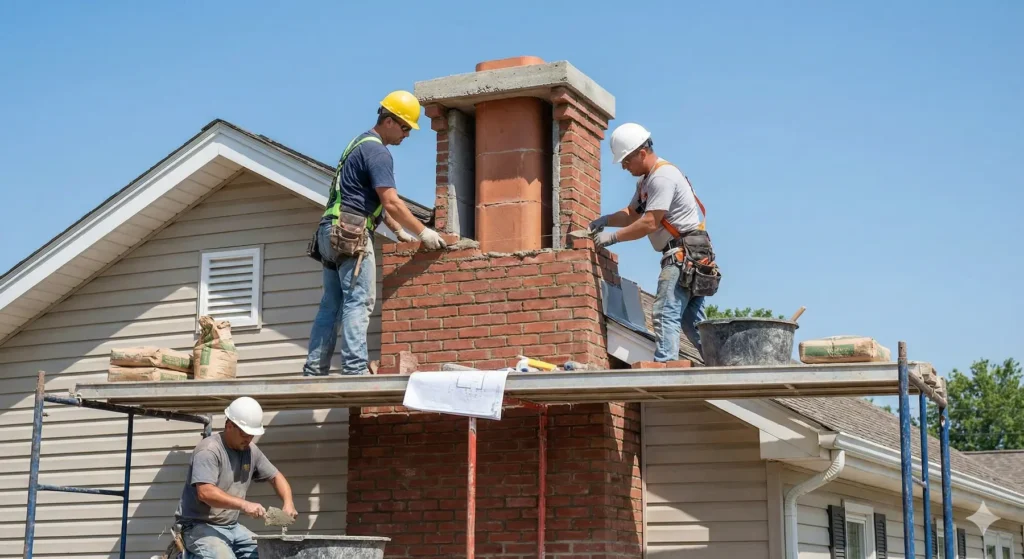
When most homeowners imagine a fireplace, they picture the cozy glow of the hearth, the crackle of burning wood, and the aesthetic appeal it adds to a living room. However, the most critical component of this system is the one that often receives the least attention: the chimney structure itself. While the fireplace is the heart of the heating system, the chimney is the engine that ensures it operates safely.
At Texas Chimney LLC, we often encounter the aftermath of corner-cutting. Many chimney issues we diagnose in the Houston area are not due to lack of maintenance but stem from fundamental flaws in the original design and build. Proper chimney construction is not merely a matter of following a blueprint; it is a strict discipline of physics and engineering that determines the long-term safety and structural integrity of your entire home.
The Weight of the Matter: Foundation Integrity
A masonry chimney is incredibly heavy. A standard brick fireplace and chimney can weigh several tons. One of the most common construction failures we see is an inadequate foundation. Unlike a wooden wall, a masonry chimney cannot settle without consequence. If the footing is not poured to the correct depth and thickness, or if it is not reinforced properly with steel, the chimney will eventually begin to sink or tilt.
This settling pulls the chimney away from the main structure of the house, creating gaps where water and pests can enter. More dangerously, it stresses the flue liner inside, causing it to crack and potentially release toxic gases into the home. When we undertake a chimney construction project, we ensure that the footing is calculated to support the immense load, ensuring that the structure stands straight and true for generations, regardless of the shifting Texas soil.
The Invisible Shield: Clearance to Combustibles
One of the most critical safety aspects of chimney construction is invisible once the walls are finished. It is called “clearance to combustibles.” Building codes mandate a specific air gap, usually two inches, between the masonry of the chimney and the wood framing of the house. This gap is essential because masonry absorbs heat.
If wood framing touches the brickwork, heat transfer can occur over time. This process, known as pyrolysis, chemically alters the wood, lowering its ignition temperature. Eventually, the wood can catch fire at surprisingly low temperatures, leading to a structure fire that starts inside the walls. Amateur builders or general contractors often fill this gap with insulation or frame right up against the brick to save space. During a professional chimney inspection, checking for these hidden clearances is difficult but vital. Proper construction from day one is the only way to guarantee this safety buffer exists.
The Liner: Containing the Beast
The flue liner is the exhaust pipe of your fireplace. Its job is to contain the byproducts of combustion: heat, smoke, creosote, and carbon monoxide. In older homes or poorly constructed newer ones, we often find liners that are the wrong size for the fireplace opening.
If a flue is too large, the smoke cools down too quickly, leading to massive creosote buildup and a high risk of chimney fires. If it is too small, the smoke cannot exit fast enough and spills back into the room. Furthermore, the joints between clay liner tiles must be perfectly sealed with refractory mortar that can withstand high heat. Standard mortar will crack and fall out, leaving gaps for fire to escape. When we perform chimney repair or construction, we prioritize the liner system, ensuring it is a sealed, seamless, and properly sized conduit that keeps the fire where it belongs.
Water Management: Fighting the Houston Climate
In Houston, our primary enemy is not just fire, but water. A properly constructed chimney includes integrated defenses against moisture entry. This starts with the chimney crown. A common construction error is capping the chimney with a thin “mortar wash” that cracks within a few years. A proper crown should be constructed of reinforced concrete with an overhang and a “drip edge” that forces rain to fall off the chimney rather than running down its face.
Additionally, the flashing system, where the chimney meets the roof, must be installed with overlapping layers of metal (step flashing and counter flashing) to accommodate the movement of the home. Poorly integrated flashing is a leading cause of roof rot and attic leaks. By using high-quality materials and proven waterproofing techniques during the build, we prevent water from eroding the structure from the inside out.
The Physics of Airflow
A chimney is, in essence, a machine that moves air. It relies on the physics of the “stack effect” to draw smoke upward. The height of the chimney relative to the roofline is not an aesthetic choice; it is a mathematical requirement. The “10-2 rule” states that a chimney must be at least two feet taller than any part of the roof within ten feet.
If a chimney is built too short, wind pressure can force smoke back down the flue. We also pay close attention to the smoke chamber, the area just above the firebox. This area must be parged (smoothed) to encourage airflow. Rough masonry in the smoke chamber causes turbulence, which slows the draft and increases dangerous creosote accumulation. Expert construction respects these aerodynamic principles to ensure your fireplace functions efficiently and cleanly.
Mortar Matters: The Bond That Holds It All
The type of mortar used in chimney construction is specific. It needs to be softer than the brick itself to allow for thermal expansion. If a builder uses a high-strength, rigid concrete mix, the bricks will crack when they expand from the heat of the fire.
Furthermore, the joints must be “struck” or tooled to a shape that sheds water. Concave joints are the standard for weather resistance. Raked or flush joints, while stylish, can allow water to pool on the brick ledge, accelerating deterioration. Using the correct mortar mix and tooling techniques is a hallmark of professional masonry work that extends the lifespan of the chimney by decades.
Conclusion
A chimney is more than a stack of bricks. It is a complex system designed to contain fire and exhaust deadly gases while withstanding the harshest weather elements. When corners are cut during construction, the safety of the entire home is compromised. Issues like improper clearances, inadequate foundations, or poor waterproofing are ticking time bombs that can lead to costly repairs or dangerous failures down the road.
Investing in professional, code-compliant construction is an investment in peace of mind. It ensures that your fireplace remains a source of comfort and joy, rather than a hidden hazard. Quality construction stands the test of time, protecting your family and your property for the long haul.
Secure Your Home’s Future with Texas Chimney LLC
Whether you are building a new home, adding a fireplace, or need to replace a failing structure, trust the experts who understand the science of safety. At Texas Chimney LLC, we build chimneys that meet the highest standards of safety and durability. Contact us today to discuss your project. Let us provide you with the solid foundation your home deserves.