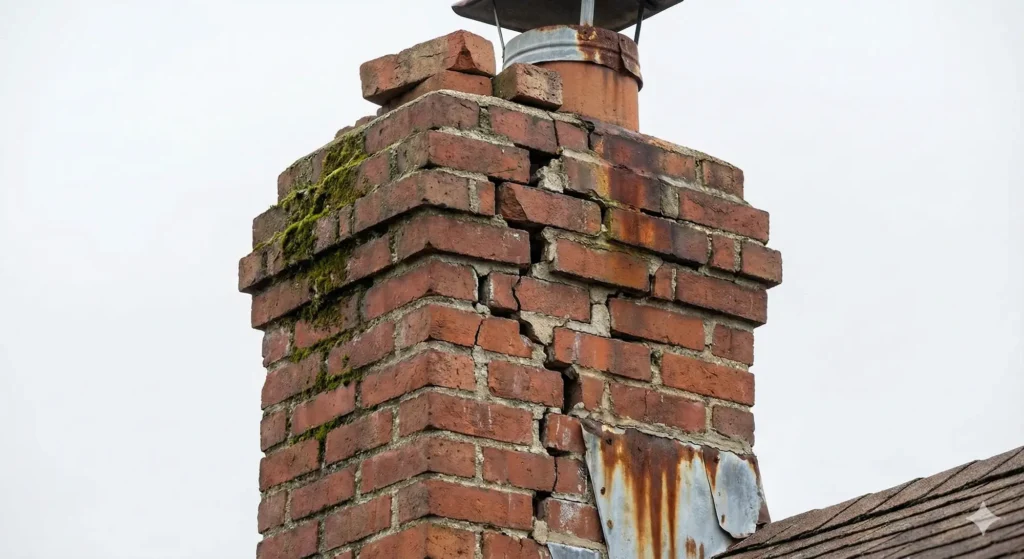
For many Texas homeowners, the chimney is a stoic, unchangeable feature of the home’s exterior. It stands tall against the skyline, often assumed to be as permanent as the foundation itself. However, masonry is not invincible. Time, weather, and settling can compromise the structural integrity of a chimney, turning a cozy hearth into a significant liability.
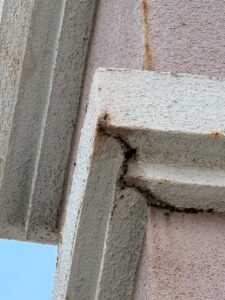
At Texas Chimney LLC, we often encounter homeowners who believe a few cracks in the mortar are merely cosmetic issues. The reality is far more concerning. When structural damage appears, it is rarely just a surface problem; it is often a symptom of a deeper failure that threatens the safety of the entire home. Understanding when to pivot from simple repairs to a full chimney replacement is critical for protecting your property and your family.
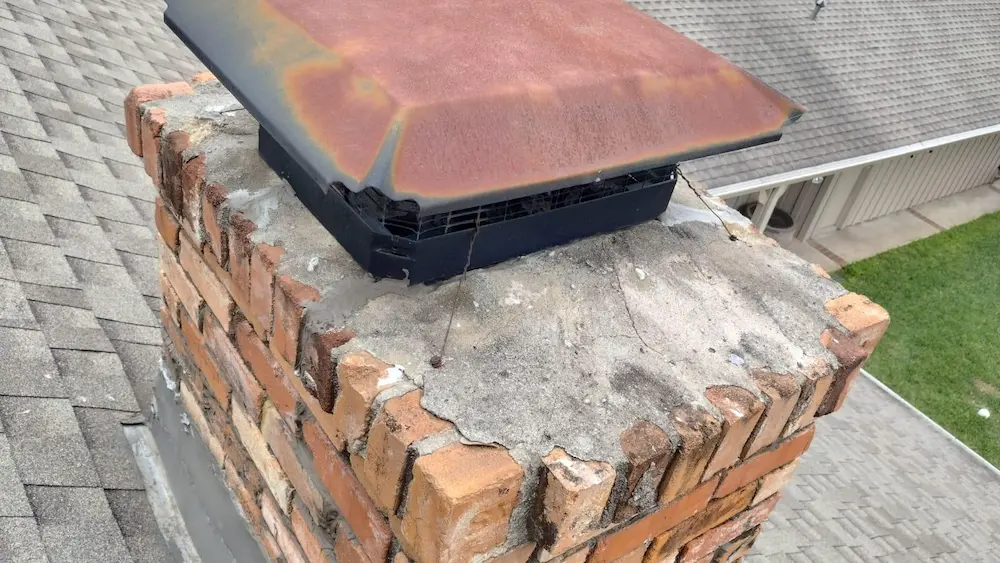
Recognizing the Red Flags of Structural Failure
Structural damage doesn’t always happen overnight. It is usually a slow, progressive decline that eventually reaches a tipping point. Identifying these early warning signs can save you from a catastrophic collapse.
The Phenomenon of Spalling Bricks
One of the most visible indicators of a failing chimney is spalling. This occurs when moisture penetrates the porous brick masonry. As temperatures fluctuate, that trapped water expands and contracts, eventually forcing the face of the brick to pop off or crumble. While a single spalled brick might seem minor, widespread spalling indicates that the masonry has lost its structural density. Once the bricks begin to crumble, they can no longer support the massive weight of the chimney stack above them.
The Dangerous “Chimney Tilt”
If you look at your chimney from the street and notice it pulling away from the siding or leaning to one side, you are witnessing a structural emergency. A leaning chimney suggests a failure in the footing or foundation. This separation creates a gap where water, insects, and rodents can enter your home walls. More importantly, a leaning chimney is unstable. In the event of a severe storm or shifting soil, common issues in Texas, tons of brick could detach and fall onto the roof or into the yard.
The Invisible Risks: What Happens Inside a Damaged Chimney
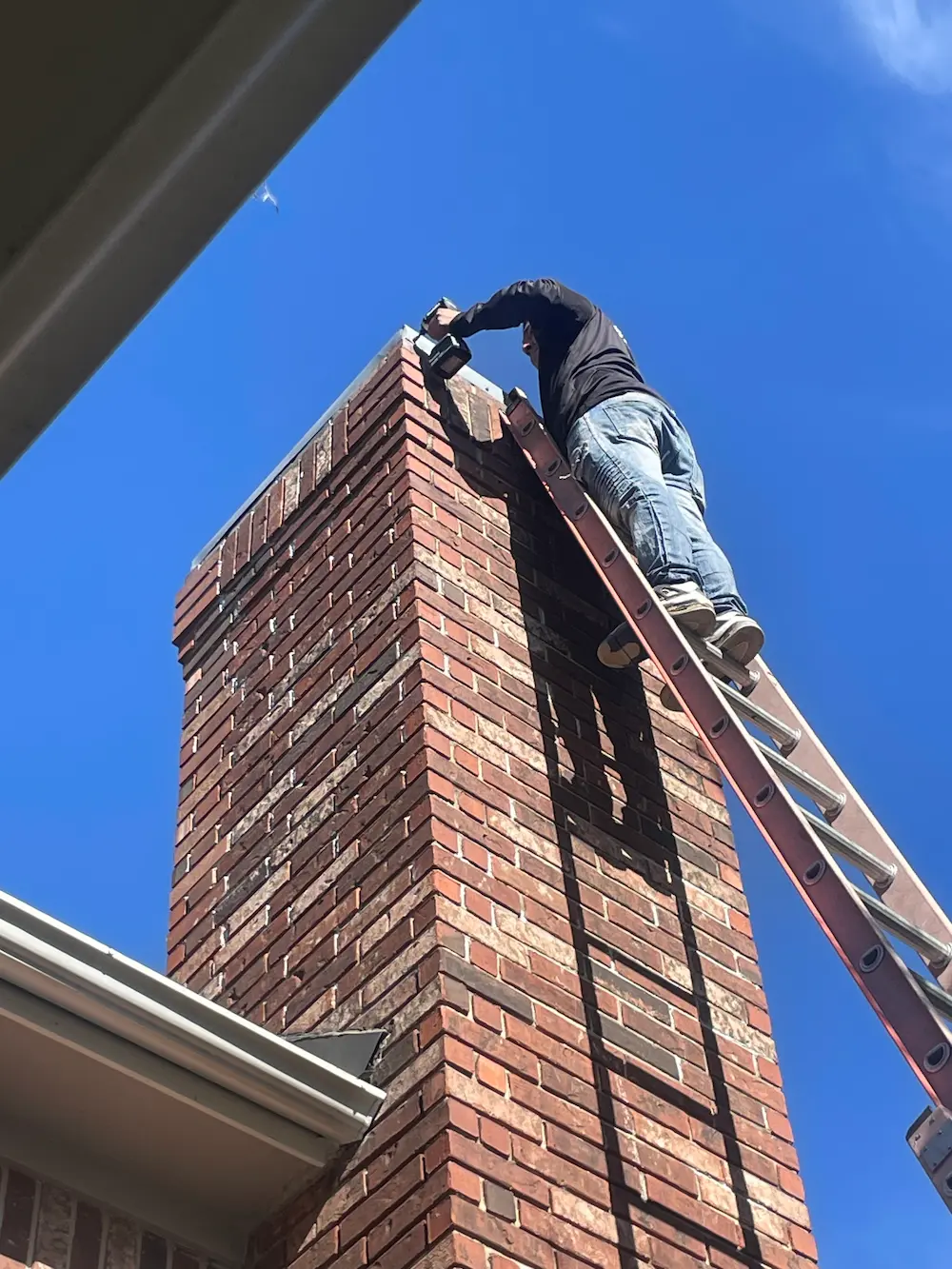
The external cracks are alarming, but the internal damage is often where the immediate danger lies. A chimney that has shifted structurally has almost certainly compromised the flue liner inside.
Carbon Monoxide and Flue Integrity
The flue liner is the designated path for toxic combustion gases to exit your home. When a chimney settles or shifts due to structural damage, the clay or tile liner inside often cracks or misaligns. These breaches allow heat and toxic gases, including Carbon Monoxide (CO), to escape the chimney and leak into your attic or living spaces.
Carbon Monoxide is odorless, colorless, and deadly. According to the Centers for Disease Control and Prevention (CDC), unintentional CO poisoning sends tens of thousands of Americans to the emergency room every year. A structurally compromised chimney is a direct pathway for this gas to re-enter your home.
Water Damage Spreading to the Home Structure
A damaged chimney is essentially a funnel for water. Once the structural bond of the mortar is broken, rainwater flows freely into the masonry. This water doesn’t just stay in the chimney; it leaches into the adjacent wood framing of your house. We frequently find rotted roof rafters, damaged ceiling joists, and mold growth in attics directly caused by a chimney that was left in disrepair for too long.
Repair vs. Replacement: Drawing the Line
Homeowners often ask, “Can’t we just repoint the mortar?” Repointing (grinding out old mortar and adding new) is an excellent maintenance task for a stable chimney, but it is not a cure for structural failure.
You cannot fix a broken bone with a band-aid, and you cannot fix a crumbling chimney with fresh mortar. Replacement becomes mandatory when:
- The integrity of the brick is gone: If the bricks turn to dust when touched, there is nothing for the new mortar to hold onto.
- The lean is significant: No amount of patching will straighten a leaning chimney. The structure must be taken down to the point of stability (or the ground) and rebuilt.
- The cost of repairs exceeds the value of replacement: extensively patching a failing system is often throwing good money after bad. A new chimney provides a fresh lifespan of 50+ years, whereas extensive repairs on a failing structure may only buy a few years.
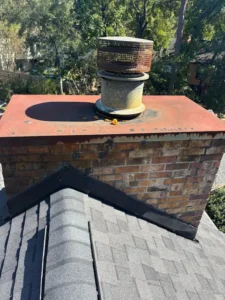
Replacing the chimney allows us to install modern safety features, such as a stainless steel liner and a proper chimney cap, ensuring the new structure meets current building codes.
The Impact of Texas Weather on Masonry
While we don’t experience the harsh winters of the Northeast, Texas weather poses unique challenges to masonry. We experience intense heat, torrential rains, and occasional rapid freeze cycles.
The Chimney Safety Institute of America (CSIA) notes that water damage is the primary enemy of masonry fireplaces. In Texas, our heavy storm seasons drive rain into every crack. If your chimney has structural gaps, that water saturation combined with the intense subsequent heat can accelerate the deterioration of the mortar binders. Furthermore, severe wind events can topple a chimney that has already been weakened by structural cracking.
You can read more about chimney safety and structural standards at the Chimney Safety Institute of America (CSIA).
The Professional Approach to Chimney Replacement
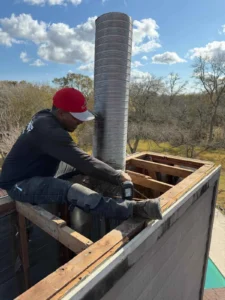
At Texas Chimney LLC, we approach replacement as a precise construction project, not just demolition. We begin by protecting your roof and landscaping. We then dismantle the damaged masonry brick by brick to prevent injury or damage to the home.
Once the unstable material is removed, we assess the foundation. A new chimney is only as good as what it stands on. We then rebuild using high-quality materials matched to your home’s aesthetic, ensuring proper flashing installation to waterproof the connection between the chimney and the roof.
Do not ignore the cracks. If you suspect your chimney has structural damage, waiting is not an option. The safety risks, from falling masonry to fire hazards, are too high.
Protect your home and family with a professional assessment.
Contact us today to schedule a comprehensive inspection. We will provide an honest evaluation of whether a repair will suffice or if a full replacement is necessary to ensure your safety.