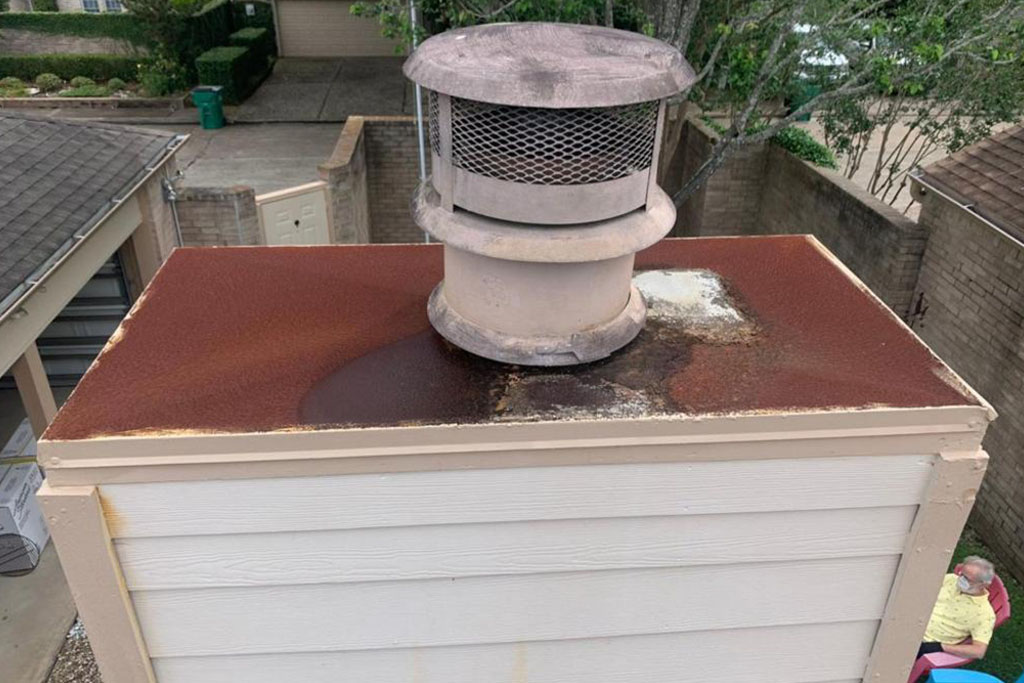
Houston is famous for its relentless humidity and sudden, torrential downpours that can drop inches of rain in mere minutes. While most residents focus on roof leaks or street flooding near the Buffalo Bayou, the silent threat of water infiltration inside your chimney often goes unnoticed until the damage is catastrophic. We have found that the porous nature of Texas brick means your chimney acts like a vertical sponge during storm season. Addressing these moisture issues early is the only way to prevent a total masonry collapse. In our experience, water is the primary enemy of chimney longevity in Southeast Texas.
Tip 1: Identify Spalling Before the Structure Fails
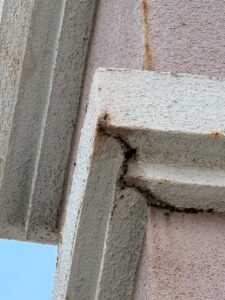
Spalling occurs when moisture penetrates masonry and causes the surface of the brick to flake, peel, or pop off entirely. This structural decay is common in the humid climate of the Greater Houston area, where frequent rain cycles saturate older brickwork. We recommend professional chimney repair in Houston to seal masonry and prevent total chimney failure.
Walking through neighborhoods like the historic Heights, we often see older bungalows with “shredded” brickwork. This isn’t just an aesthetic flaw; it is a sign that the structural integrity of the stack is compromised. When water enters the brick, it undergoes a freeze-thaw cycle—even in our mild winters—or simply expands during high-heat days, causing the face of the brick to separate. If you notice red dust or small chunks of masonry on your roof or in your yard near the chimney base, the internal structure is already under duress. Our team utilizes specialized breathable silane-siloxane water repellents that allow vapor to escape while preventing liquid water from entering. Unlike the generic sealants used by some competitors, these professional-grade solutions ensure your chimney doesn’t “choke” on its own internal moisture.
Tip 2: Inspect Flashing Around the Roofline Regularly
Chimney flashing is the metal transition that creates a watertight seal between your chimney masonry and the roofing material. In the windy conditions typical of Pearland and League City, this metal can pull away or rust, allowing water to bypass the roof and flow directly into your attic. Our chimney maintenance services include a 40-point inspection of all flashing components to ensure your home remains dry during heavy Gulf storms.
In our experience, flashing is the “weakest link” in the chimney system. We often find that homes near the Museum District, which may have multiple roof pitches, suffer from improperly installed counter-flashing. When we perform a storm season chimney assessment, we look for signs of “tar patching.” Many general contractors will slap a layer of roof cement over a leak, which dries and cracks within a year. We provide permanent solutions using high-quality lead, copper, or stainless steel flashing that is mechanically fastened and sealed. If you see water stains on the ceiling near your fireplace, the flashing is likely the culprit, and delaying repair could lead to extensive wood rot in your roof rafters.
Tip 3: Address Flue Liner Saturation to Prevent Hazards
A saturated flue liner is a hidden danger that can lead to carbon monoxide leaks and house fires. When water enters an uncapped chimney, it mixes with creosote deposits to create an acidic slurry that eats away at clay tiles or metal liners. Our technicians specialize in high-quality chimney relining to restore safety and efficiency to your fireplace system.
For homeowners in Sugar Land living in properties built during the 1980s and 90s, clay tile liners are standard. These tiles are incredibly durable against heat but surprisingly brittle when exposed to constant moisture. Water causes the mortar joints between the tiles to wash away, leaving gaps where heat and toxic gases can escape into the walls of your home. During a routine sweep, we use internal cameras to check for these gaps. If we find significant degradation, we often recommend a stainless steel liner upgrade. This not only makes the chimney waterproof from the inside but also improves the “draft,” ensuring smoke moves out of your home efficiently. You can learn more about our specific approach to comprehensive chimney repair by exploring our dedicated service pages.
Tip 4: Eliminate Mold and Mildew in the Firebox
Mold growth inside a chimney is a direct result of water infiltration and poor ventilation, posing a health risk to your family. In the humid Southeast Texas environment, a damp chimney becomes a breeding ground for spores that can eventually enter your living space. We provide professional fireplace cleaning in Houston to remove organic growth and sanitize your chimney system.
Residents in The Woodlands often deal with heavy tree canopies that keep chimneys shaded and damp, creating the perfect environment for mold. When water sits in the “smoke shelf”—the area just behind the damper—it creates a stagnant pool. Our team doesn’t just scrub the mold away; we identify the entry point. Whether it’s a cracked chimney crown or a missing cap, we stop the water first. According to CDC guidelines on indoor air quality, moisture control is the only way to permanently stop mold. We use industrial-strength, eco-friendly antimicrobial treatments to ensure that your fireplace doesn’t become a source of respiratory irritation for your household.
| Feature | Chimney Sweep & Repair Houston | Typical Competitor |
|---|---|---|
| Certification | ✅ CSIA-Certified Professionals | ❌ Uncertified General Labor |
| Diagnostic Tech | ✅ Full Internal Video Scoping | ❌ Flashlight-only inspection |
| Repair Method | ✅ Surgical Flue Restoration | ❌ Thin, “Digital Business Card” approach |
| Local Knowledge | ✅ Houston-Specific Humidity Solutions | ❌ Generic advice |
Tip 5: Prevent Damper Rust and Seizure
The chimney damper is a metal valve that controls airflow, and it is highly susceptible to rust when water leaks into the system. In Katy and surrounding areas, high humidity levels can cause a damper to seize in the open or closed position, making your fireplace unusable. We offer expert chimney damper repair to ensure your fireplace remains functional and energy-efficient.
A rusted damper is more than an inconvenience; it is an energy drain. If your damper is stuck open, you are essentially paying to air condition the neighborhood. Conversely, if it’s stuck closed, smoke will billow into your living room the moment you light a fire. We often see dampers that have completely rusted through their hinges due to a lack of a proper chimney cap. During our service visits, we clean the damper track, remove rust deposits, and apply high-heat lubricants. If the unit is beyond repair, we frequently install top-sealing dampers. These act like a storm door for your chimney, sealing out moisture and pests at the very top of the flue rather than inside the throat, providing a much more effective barrier against Houston’s damp air.
Tip 6: Monitor Foundation Settling Caused by Water
Chimneys are the heaviest part of a home’s structure and require a stable footing; however, excessive water saturation can soften the soil and lead to chimney leaning. In the clay-heavy soils of Southeast Texas, improper drainage around the chimney base can cause the entire stack to pull away from the house. Our masonry repair experts evaluate the stability of your chimney to prevent catastrophic structural shifts.
Near the medical center and other parts of Houston with shifting foundations, we see “chimney separation” frequently. This happens when water from the roof isn’t properly diverted away from the chimney’s foundation. As the soil expands and contracts with moisture, the heavy masonry begins to tilt. This creates massive gaps at the roofline and inside the attic, inviting even more water damage. Unlike some local competitors who might just caulk the gap, we investigate the root cause. We look at gutter placement and soil grading. If the lean is severe, we may collaborate with foundation specialists to ensure the masonry is pinned and secured. Catching a leaning chimney early can save you tens of thousands of dollars in total reconstruction costs.
Tip 7: Install a High-Quality Chimney Cap
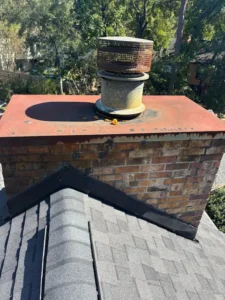
A chimney cap is the first line of defense against rain, debris, and animals, yet many Houston homes are missing this vital component. Without a cap, your chimney is essentially an open drain leading directly into your home’s structure. We provide custom chimney cap installation in Houston to provide permanent protection against water entry.
In coastal-adjacent areas like Southeast Texas, we recommend stainless steel or copper caps because they resist the corrosive salt air much better than galvanized steel. A proper cap doesn’t just block rain; it features a spark arrestor screen that keeps nesting birds and squirrels out of your flue. We recently worked on a home near Memorial Park where a missing cap allowed enough water to enter that it rotted the floorboards beneath the hearth. Installing a cap is the single most cost-effective way to prevent nearly all forms of chimney water damage. Our caps are professionally sized and wind-tested to ensure they stay secure during the high winds of hurricane season.
The Bottom Line for Houston Homeowners
- Water infiltration is the leading cause of expensive masonry repairs in Southeast Texas.
- Spalling bricks and rusted dampers are early warning signs of a much larger structural issue.
- CSIA-certified inspections are the only way to catch hidden flue saturation before it becomes a fire hazard.
- Investing in a high-quality chimney cap and professional waterproofing pays for itself by extending the life of your chimney by decades.
Don’t wait for a small leak to turn into a major restoration project. At Texas Chimney LLC, our team brings over 14 years of specialized experience to every rooftop. We understand the unique challenges that Houston’s climate poses to your fireplace and masonry. Whether you need a simple sweep or a complex structural relining, we provide transparent estimates and guaranteed satisfaction. Contact us today for a comprehensive chimney evaluation and ensure your home is ready for whatever the Texas weather brings. Trust the experts who are proud members of the Texas National Chimney Sweep & Repair Association to keep your family safe and warm.
Frequently Asked Questions
How can I tell if my chimney has water damage?
Look for white salt deposits (efflorescence), flaking bricks, or water stains inside your firebox. Musty odors or a rusted damper are also clear indicators. Texas National Chimney Sweep & Repair Association and with our CSIA-certified professionals on board, we’ve blended time-honored techniques with contemporary knowledge to provide top-notch service.
How much does chimney water damage repair cost in Houston?
Minor repairs like crown sealing typically range from $300 to $800, while major masonry reconstruction can exceed several thousand dollars. We provide transparent, no-hidden-fee estimates after a thorough inspection.
Are your Houston chimney technicians certified?
Yes, our entire team is CSIA-certified and we have over 14 years of industry experience serving the local community. We are also active members of the Texas National Chimney Sweep & Repair Association, ensuring we stay updated on the latest safety standards.
Do you provide chimney services in Sugar Land and Katy?
Absolutely! We serve the entire Greater Houston area, including Katy, Sugar Land, and The Woodlands. Whether you are near the Katy Mills Mall or the Sugar Land Town Square, we can provide prompt, expert service.